



Washing, drying and storing tips that keep baby and kids clothing soft, bright and ready for the next child — without harsh chemicals or complicated routines.
Baby and kids clothes go through more washes than almost anything else in the house. A little care at each step keeps fabrics soft, prints intact and seams strong — and makes hand-me-downs genuinely wearable.
Read the label once, then remember it
Most cotton baby basics are happy at 30–40°C. Wool, merino and some bamboo blends need a cool, gentle cycle. Anything with a waterproof coating should skip the tumble dryer. If you are unsure, wash cooler than you think you need: heat is what shrinks fibres and fades colour.
Wash inside out, with the fastenings closed
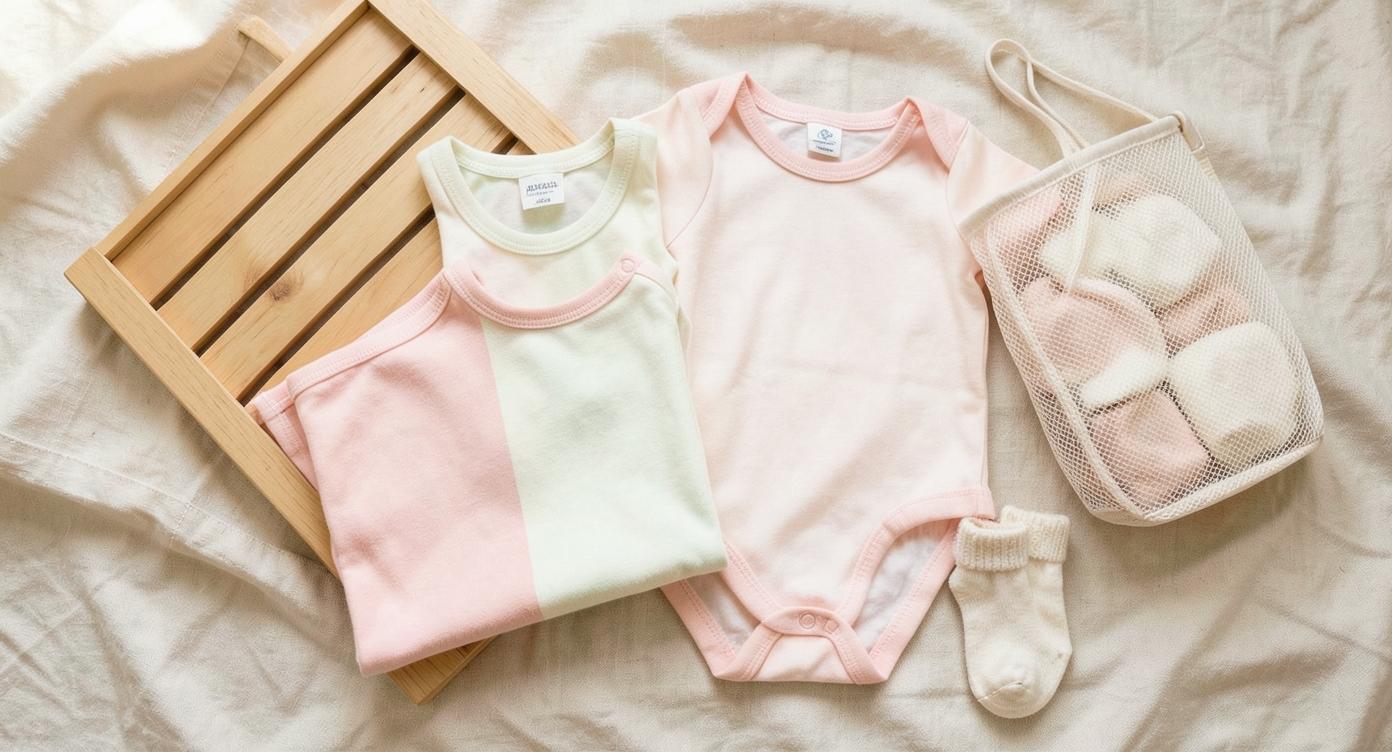
Turning garments inside out protects prints and reduces surface pilling. Close poppers and zips so they do not snag other pieces, and use a mesh laundry bag for socks, mittens and anything with a delicate trim.
Use less detergent than you think
Overdosing detergent leaves residue in the fabric, which can irritate sensitive skin and make towels and sleepsuits feel stiff. Follow the dose for your water hardness and skip fabric softener on baby clothes — it coats fibres and reduces absorbency. A second rinse is often more useful than extra soap.
- Choose a gentle, fragrance-free detergent for newborns and eczema-prone skin.
- Wash new clothes before the first wear to remove manufacturing finishes.
- Separate dark colours for the first few washes.
- Treat stains promptly with cool water — hot water sets protein stains.
Dry gently
Air drying in the shade protects colour and elasticity. If you use a dryer, choose low heat and remove items while slightly damp, then smooth them flat. Wool and knitwear should dry flat on a towel so they keep their shape. Never dry waterproof jackets on high heat.
Store clean and dry
Storing clothes with food or milk residue attracts pests and sets stains over time. Make sure everything is completely dry before folding, and keep outgrown pieces in a breathable cotton bag rather than a sealed plastic box. A lavender or cedar sachet helps, but keep it out of reach of children.
A stain cheat sheet
- Milk and formula: rinse in cool water, then wash normally.
- Food and fruit: dab with cool water and a little gentle detergent; avoid rubbing.
- Grass and mud: soak in cool water with oxygen bleach, then wash.
- Crayon and marker: blot with a small amount of gentle detergent, then wash inside out.
When to retire a piece
Loose seams, stretched necklines and thin knees are worth repairing once. If a zip is broken beyond repair or the fabric has become see-through, it has done its job. Cut clean fabric into cleaning cloths, or pass it to a textile recycling point rather than the general bin.
Good care is not complicated: cooler washes, less detergent, gentle drying and dry storage. Those four habits will keep a child's wardrobe looking newer for longer.